ANNUAL REPORT 2025
Abs Development Organization for Woman & Child (ADO)
Three decades of steadfast humanitarian commitment, women's empowerment, child protection, and building integrated, climate-resilient responses across governorates in the Republic of Yemen.
Abs Development Organization
For Woman & Child (ADO)Table of Contents
17 Core Sections & Strategic Pillars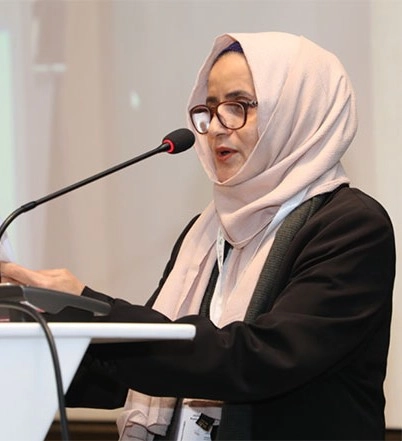
Dr. Aisha Thawab
Chairperson, Abs Development OrganizationForeword by the Chairperson
Leadership Message & Community CommitmentThe 2025 Annual Report of the Abs Development Organization for Woman & Child (ADO) embodies a year of continuous dedication and unwavering commitment to supporting the most vulnerable communities across Yemen amidst worsening humanitarian, economic, and climate shocks. Despite operational complexities, access challenges, severe funding shortfalls, intermittent supply chain disruptions, and bureaucratic hurdles, ADO continued to fulfill its humanitarian and developmental mission, anchored in deep field experience, strategic partnerships, and the abiding trust of the communities we serve.
Throughout 2025, ADO implemented an integrated multisectoral portfolio spanning Nutrition, Health, Water, Sanitation and Hygiene (WASH), Protection, Education, Community Infrastructure, Local Governance, Sustainable Livelihoods, and Climate Resilience. These interventions significantly expanded access to lifesaving care, rehabilitated classroom learning environments, reinforced primary health facilities, safeguarded women and children, restored essential public assets, and bolstered local resilience and recovery capacities.
We placed paramount emphasis on programmatic quality and Accountability to Affected Populations (AAP) through robust Monitoring, Evaluation, Accountability, and Learning (MEAL) systems, extensive field verifications, multi-channel feedback and grievance mechanisms, and rigorous Safeguarding protocols. Furthermore, gender equity, social inclusion, and environmental sustainability were systematically embedded into every stage of project design, execution, and oversight.
Beyond direct service delivery, ADO actively championed local leadership, localization, and high-level collaborative dialogue. The 2025 Yemen Humanitarian-Development-Peace (HDP) Nexus Conference served as a landmark platform, uniting local and international NGOs, UN agencies, donors, and technical experts to highlight women's leadership and foster operational synergy across relief, development, and peacebuilding. Concurrently, ADO advanced rural resilience through the BMZ-funded Farmer-Managed Natural Regeneration (FMNR) and Coffee & Fruit Value Chain project in partnership with Vision Hope International (VHI).
The milestones articulated in this report are the collective achievement of ADO’s dedicated staff, volunteers, partners, local authorities, community committees, and rights-holders. I extend my sincere gratitude to all bilateral and multilateral donors and partners for their enduring trust, to our teams for their untiring field professionalism, and to local communities for their invaluable participation in prioritizing needs, executing initiatives, and sustaining progress.
As we look forward to 2026, we will build upon these achievements, maintaining our commitment to sustaining lifesaving basic services, fostering food security and sustainable livelihoods, expanding climate-resilient programs, refining beneficiary data systems, empowering women and youth leadership, strengthening local partnerships, and advocating for flexible, multi-year financing.
"At ADO, we believe that investing in human capital, empowering women, fostering community ownership, and building the institutional capacity of local actors are the indispensable pillars for recovery, sustainable development, and enduring peace. We will continue to operate with accountability, partnership, and transparency for a society defined by dignity, justice, and resilience."
About Us: Identity, Mission & Institutional Values
Serving vulnerable Yemeni communities since 1996Our Institutional Culture
Abs Development Organization for Woman & Child (ADO) is a leading non-governmental, non-profit humanitarian and developmental national organization. Founded in 1996, ADO employs an evidence-based strategic approach to reach the most vulnerable women, children, internally displaced persons (IDPs), and host communities in underserved rural areas across Yemen. Over three decades, ADO has earned the trust of major United Nations agencies and international donors by delivering comprehensive, multisectoral responses centered on women—the core of family resilience—and driven by meaningful community participation.
Together to achieve a better life for women, children, and youth.
Our Mission
Working cooperatively to foster improved standards of living for women, children, youth, and marginalized groups by providing innovative, sustainable emergency solutions, protection and care services, educational support, and women's multifaceted empowerment, while bolstering adaptive resilience through sustainable livelihoods.
Our Core Values
Strategic Goals
Poverty alleviation and enhanced living standards for women, children, youth, and marginalized groups through innovative, sustainable food security, livelihood, and climate adaptation solutions.
Promoting universal access to quality education and narrowing gender disparities across primary and secondary schooling.
Improving health conditions, environmental sanitation, and hygiene cultures for vulnerable women, children, and youth.
Advancing social justice, civil rights, and political participation for women, youth, and minorities to underpin community peace.
Delivering timely, lifesaving humanitarian relief that preserves developmental gains and prevents standard-of-living collapses.
Field Office Network
ADO operates through established field and hub offices across Sana'a, Aden, Al-Hodeidah, Taiz, Hajjah, and Raymah. The Sana'a and Aden offices lead overall strategic coordination, program oversight, and institutional support.
Workforce & Human Resources
Anti-Fraud & Integrity Policy
ADO maintains a dedicated internal Anti-Fraud and Anti-Corruption unit tasked with deterrence, early detection, and investigation of financial and procedural irregularities. A secure, confidential internal whistleblowing mechanism empowers staff and partners to raise concerns safely, ensuring zero tolerance for misconduct.
Overview of the Humanitarian Situation in Yemen (2025)
Macro-level analysis, severe funding gaps, and compounding operational complexitiesThroughout 2025, Yemen remained one of the world's most severe and complex humanitarian crises, driven by prolonged conflict, acute economic deterioration, currency devaluation, spiraling commodity prices, depleted livelihood opportunities, and recurrent climate-induced disasters. According to the 2025 Yemen Humanitarian Needs and Response Plan (HNRP), an estimated 19.5 million people required humanitarian assistance and protection services—an increase of 1.3 million compared to 2024. The HNRP targeted 10.5 million of the most vulnerable people, with financial requirements totaling USD 2.47 billion.
The crisis manifested acutely in catastrophic food insecurity, widespread child stunting and wasting, disrupted primary healthcare, damaged potable water infrastructure, and strained child and gender protection services. Women, children, elderly persons, individuals with disabilities, IDPs, and marginalized social groups bore a disproportionate burden of vulnerability. Nearly 4.8 million Yemenis remained displaced in makeshift camps, while extreme droughts and devastating flash floods repeatedly devastated shelters and local agricultural livelihoods.
Compounding these needs, humanitarian operations faced unprecedented international funding shortfalls. By the close of 2025, the HNRP had secured only approximately 25% of required funds, compelling relief clusters to ration or suspend essential services and placing 453 health facilities under partial or imminent shutdown across 22 governorates. This crisis underscores the imperative to bridge emergency relief with local capacity strengthening, institutional rehabilitation, and sustainable, localized development solutions.
Executive Summary
An integrated portfolio combining lifesaving relief, systemic recovery, and community empowermentDuring 2025, Abs Development Organization executed a multidimensional programmatic portfolio harmonizing emergency humanitarian response with community resilience and local development. Sectoral interventions encompassed Nutrition, Health, WASH, Protection, Education, Public Infrastructure, Local Governance, Climate Adaptation, Agriculture and Livelihoods, and the operationalization of the Humanitarian-Development-Peace (HDP) Nexus.
In Nutrition, ADO sustained operational support for 198 health facilities across Al-Hodeidah and Raymah, screening 203,934 children and pregnant/lactating women (PLW) for acute malnutrition and distributing 1,384.52 metric tons of specialized therapeutic commodities under the Targeted Supplementary Feeding Programme (TSFP). Under the multisectoral RISE project (funded by FCDO in partnership with IRC), ADO reached over 48,000 individuals with clinical consultations, emergency nutrition, WASH improvements, and comprehensive child and GBV protection. In Education, 2,130 students and educators benefited from the comprehensive rehabilitation of 2 schools, solar power installations, gender-sensitive sanitation facilities, and teacher capacity development in Ad-Dhale'e.
In Community Infrastructure and Local Governance, ADO achieved 100% completion of 15 strategic subprojects across 5 districts in Hajjah Governorate under the SIERY project (funded by UNDP), directly serving 661,563 citizens and indirectly benefiting 1,669,770 residents. Additionally, ADO convened the landmark 2025 Yemen HDP Nexus Conference in Amman to advocate for localized financing and women's leadership, while sustaining natural resource conservation and coffee value-chain enhancement under the BMZ/VHI-funded initiative in Ad-Dhale'e and Lahj.
Key Statement of Achievement (2025)
The verified outcomes of 2025 illustrate ADO's capacity to merge vast humanitarian reach with architectural and medical rigor, civil infrastructure restoration, institutional system strengthening, and leadership in regional policy dialogue.
2025 Key Achievements & Performance Indicators at a Glance
Verified performance data and direct community reachIndividuals screened for acute malnutrition
New therapeutic admissions (MAM treatment)
People reached with health & nutrition education
Outpatient clinical consultations (RISE)
Students & teachers supported in Ad-Dhale'e
Direct beneficiaries from 15 subprojects (SIERY)
Indirect beneficiaries of public infrastructure
Specialized nutrition commodities distributed
Convened in Amman + 300 NGOs on Platform
| Project Title | Sector | Donor / Partner | Geographic Target | Key Verified Outputs |
|---|---|---|---|---|
| Targeted Supplementary Feeding Programme (TSFP) | Nutrition & Health | World Food Programme (WFP) | Al-Hodeidah & Raymah (10 Districts) | 198 health facilities supported; 203,934 screenings; 52,511 admissions; 1,384.52 MT distributed; 145,841 sensitized. |
| Multisectoral RISE Project (Empowerment & Protection) | Health, Nutrition, Protection | FCDO via International Rescue Committee (IRC) | Sana'a, Al-Hodeidah, Raymah | >48,000 beneficiaries; 40,261 clinical consultations; 935 SAM cases managed; integrated safe spaces for women & children. |
| Overcoming Barriers to Education for Vulnerable Children | Education in Emergencies | War Child Canada | Ad-Dhale'e (Qa'atabah - Maris) | 2,130 direct beneficiaries; 23 classrooms rehabilitated; 7 WASH units; 180 double desks; 36 educators trained. |
| Supporting Institutional and Economic Resilience (SIERY) | Governance & Infrastructure | United Nations Development Programme (UNDP) | Hajjah (5 Districts) | 15 subprojects 100% completed; dialysis center, rural water networks, urban roads; 661,563 direct beneficiaries. |
| Yemen HDP Nexus Initiative & Localization Platform | Localization & Peacebuilding | Welthungerhilfe (WHH) | Nationwide (All Governorates) | Inter-agency coordination network with >300 NGOs; international conference convened with 137 delegates. |
| Biodiversity & Coffee Value Chain Enhancement (FMNR) | Livelihoods & Climate | BMZ via Vision Hope International (VHI) & NAHR | Ad-Dhale'e & Lahj | National Coffee Friends Network launched (64 entities); 2 symposiums; mobile advisory app; documentary production. |
Geographic Scope of Interventions
Active operational footprints in the most underserved rural and frontline areas| Governorate / Level | Targeted Districts & Locations | Active Projects | Intervention Sectors |
|---|---|---|---|
| Al-Hodeidah | Al-Garrahi, Al-Hali, Bayt Al-Faqih, Ad-Durayhimi, As-Sukhnah, Bajil | TSFP Nutrition (WFP), RISE Project (FCDO/IRC) | Nutrition, Health, WASH, Protection |
| Raymah | Al-Jabin, Al-Ja'fariyyah, As-Salafiyyah, Kusmah, Mazhar | TSFP Nutrition (WFP), RISE Project (FCDO/IRC) | Nutrition, Health, WASH, Child/GBV Protection |
| Sana'a | Al-Haymah Ad-Dakhiliyyah District | Multisectoral RISE Project | Primary Healthcare, Nutrition, Protection |
| Ad-Dhale'e | Qa'atabah (Maris subdistrict) & Ash-Shu'ayb | Education (War Child), Coffee/FMNR (BMZ/VHI) | Education in Emergencies, Livelihoods, Agroforestry |
| Hajjah | Abs, Al-Mahabishah, Mustaba, Hajjah City, Najrah | Institutional & Economic Resilience (SIERY / UNDP) | Health Infrastructure, Water, Sanitation, Urban Roads |
| Lahj & Ad-Dhale'e | Yafa'a, Yahar, Ash-Shu'ayb | Biodiversity, FMNR & Coffee (BMZ/VHI) | Specialty Coffee, Biodiversity, Rural Resilience |
| Amman / Hybrid International | W Amman Hotel + Nationwide Virtual Hubs | Yemen HDP Nexus Conference 2025 | Localization, Women's Leadership, Triple Nexus |
Targeted Supplementary Feeding Programme (TSFP)
Funded by and implemented in strategic partnership with the World Food Programme (WFP)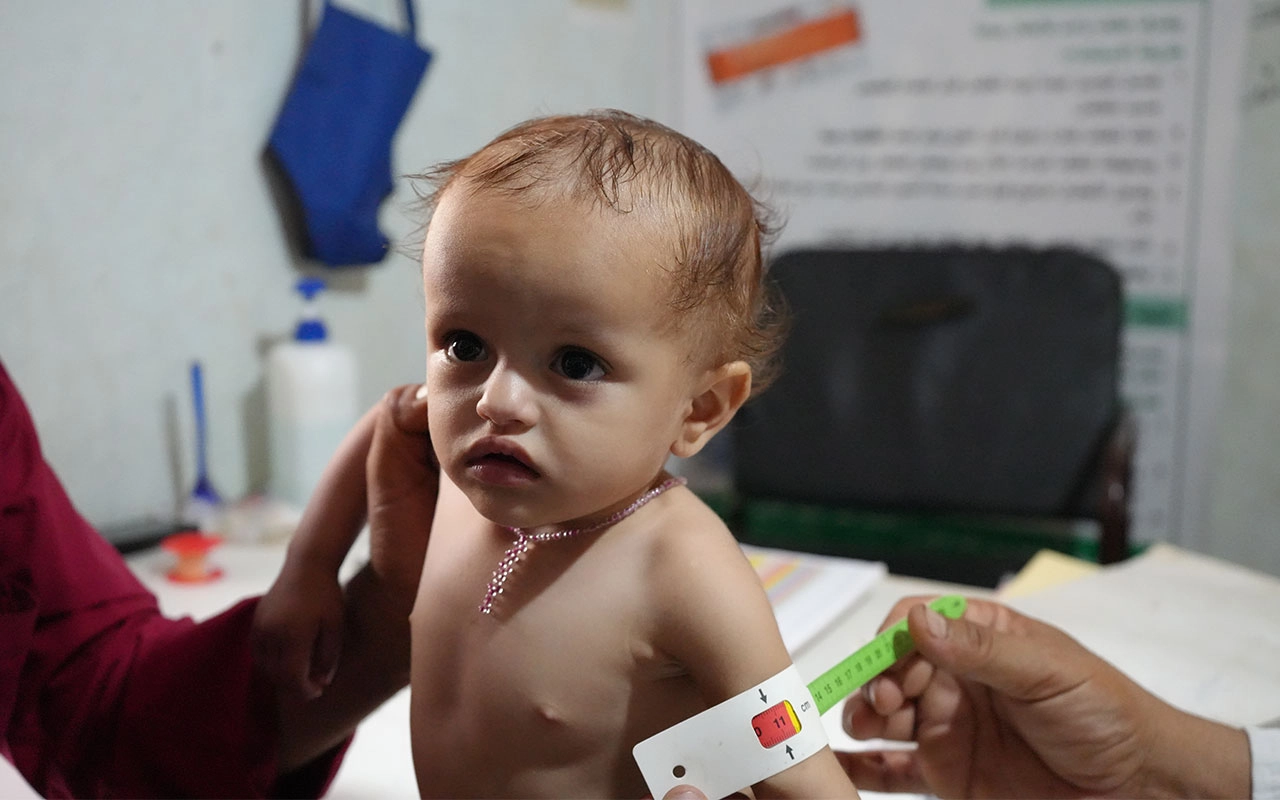
Intervention Overview
The project provides lifesaving management and prevention of Moderate Acute Malnutrition (MAM) among children under five and pregnant and lactating women across 10 rural districts in Al-Hodeidah and Raymah governorates. ADO maintained operations in 198 fixed health facilities, supported referral pathways for severe acute cases with medical complications, and managed commodity distribution and logistics.
Therapeutic Performance vs. International Sphere Standards
Operational Challenges & Adaptive Measures
The project encountered intermittent disruptions in specialized commodity supply pipelines and extreme mountainous terrain in Raymah. ADO responded by establishing a preemptive pipeline tracking system in close coordination with WFP, intensifying community volunteer outreach, and conducting targeted home tracing to minimize treatment default.
Reduction of Illness and Abuse through Systemic Empowerment (RISE)
Funded by UK FCDO in consortium partnership with the International Rescue Committee (IRC)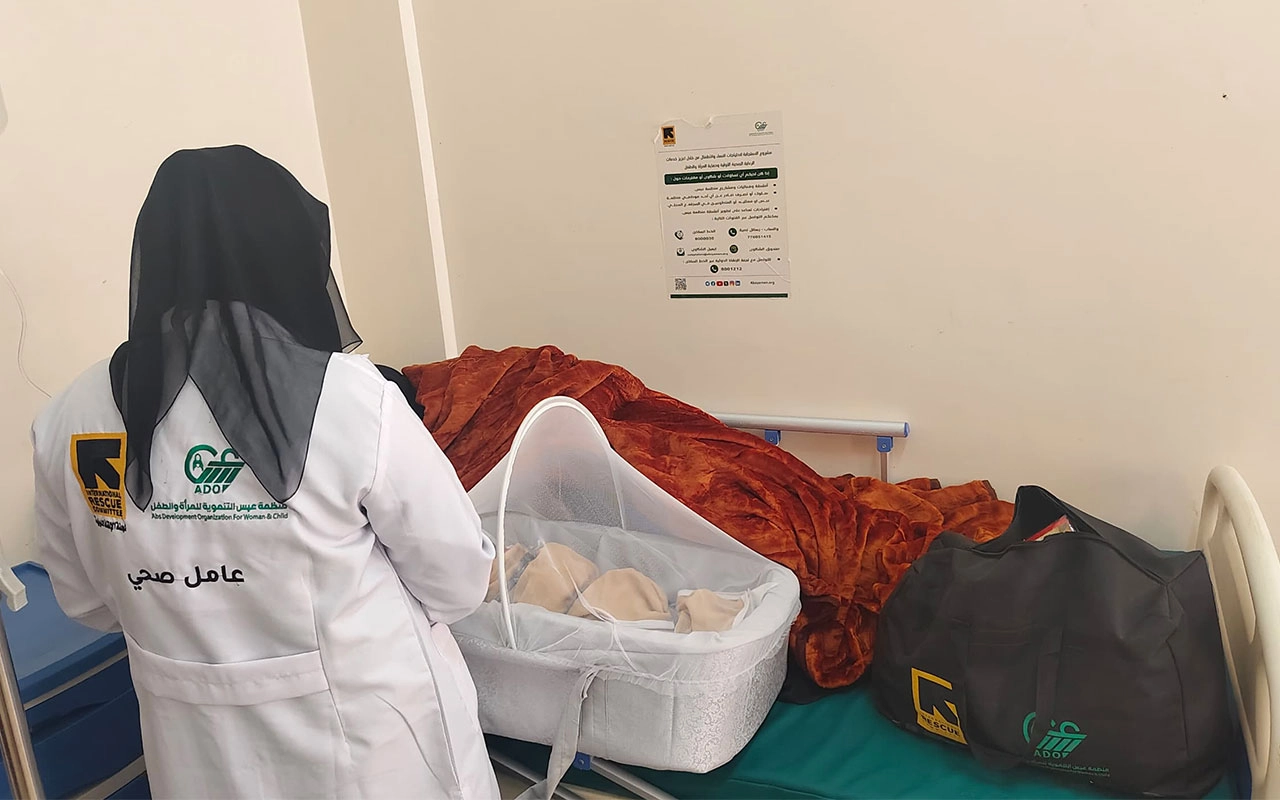
Supported 18 primary health facilities and 6 mobile outreach clinics. Delivered 40,261 outpatient consultations (93,233 cumulative), assisted 248 skilled births, provided family planning for 872 women, and funded monthly incentives for 156 healthcare workers.
Delivered specialized protection to 650 women/girls, opened 119 new case management files, supported 610 GBV survivors with psychosocial and legal aid (306 consultations), and enrolled 681 women in vocational life skills courses.
Provided individual protection services to 424 children, managed 221 complex child protection cases, engaged 1,085 children in Social-Emotional Learning (SEL) within child-friendly spaces, and provided focused group therapy for 97 children.
Overcoming Barriers to Education for Vulnerable Children
Funded by and partnered with War Child Canada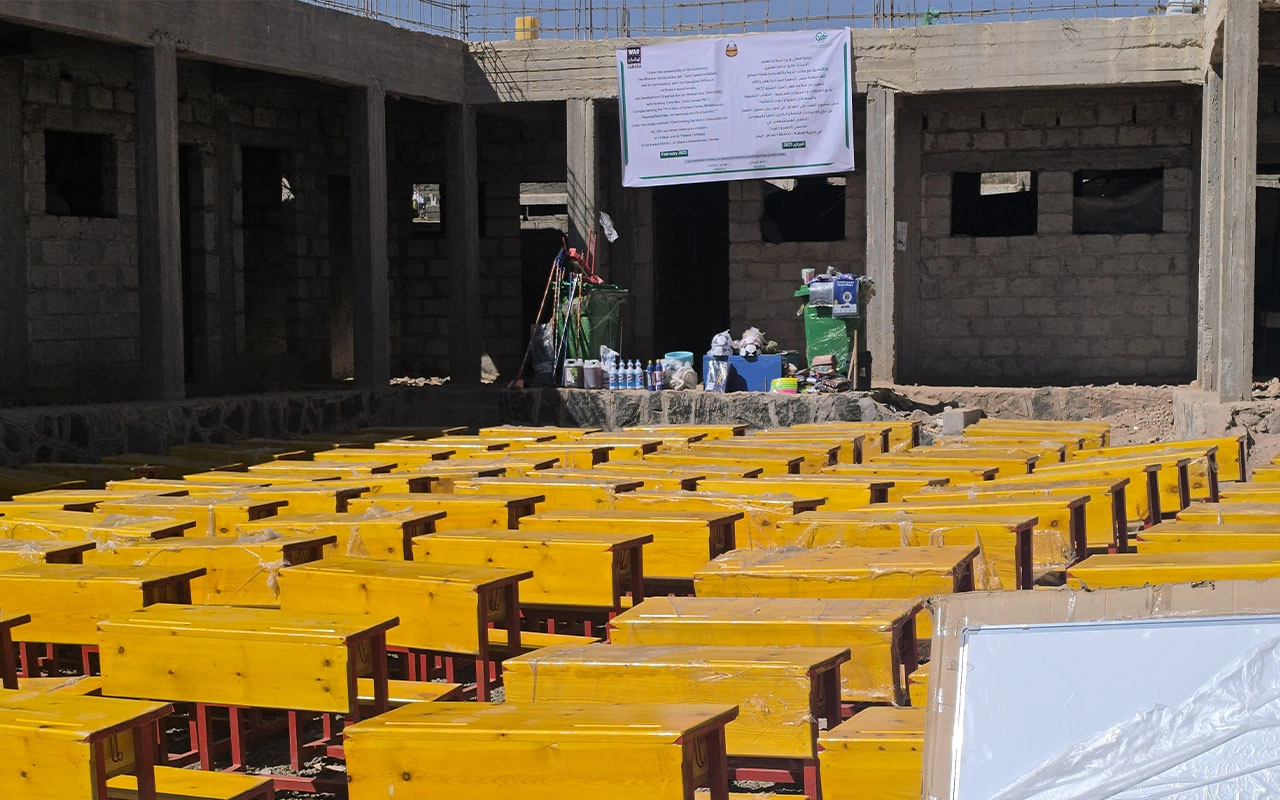
Physical Infrastructure & Equipment
- Rehabilitated 23 classrooms: 17 at Al-Nasr School and 6 at Al-Thawrah School.
- Built & refurbished 7 school WASH units: 4 for boys (serving 591 students) and 3 gender-segregated units (serving 648 girls).
- Installed full solar photovoltaic energy systems at Al-Nasr School for power and night literacy.
- Supplied furniture and materials: 180 double student desks, 23 whiteboards, and 4 recreational kits.
Academic Support, Hygiene & Teacher Training
- Remedial Learning: Enrolled 193 low-performing students in remedial classes and incentivized 10 teachers.
- Educator Training: Upskilled 36 teachers (male and female) on Education in Emergencies (EiE) and positive discipline.
- School Hygiene & Health: Reached 2,317 participants through hygiene awareness and supplied schools with first-aid kits.
- Grade breakdown: 1,171 students in Grades (1-6), 537 students in Grades (7-9), and 369 secondary school students.
Supporting Institutional & Economic Resilience in Yemen (SIERY)
Funded by the European Union and implemented in partnership with UNDP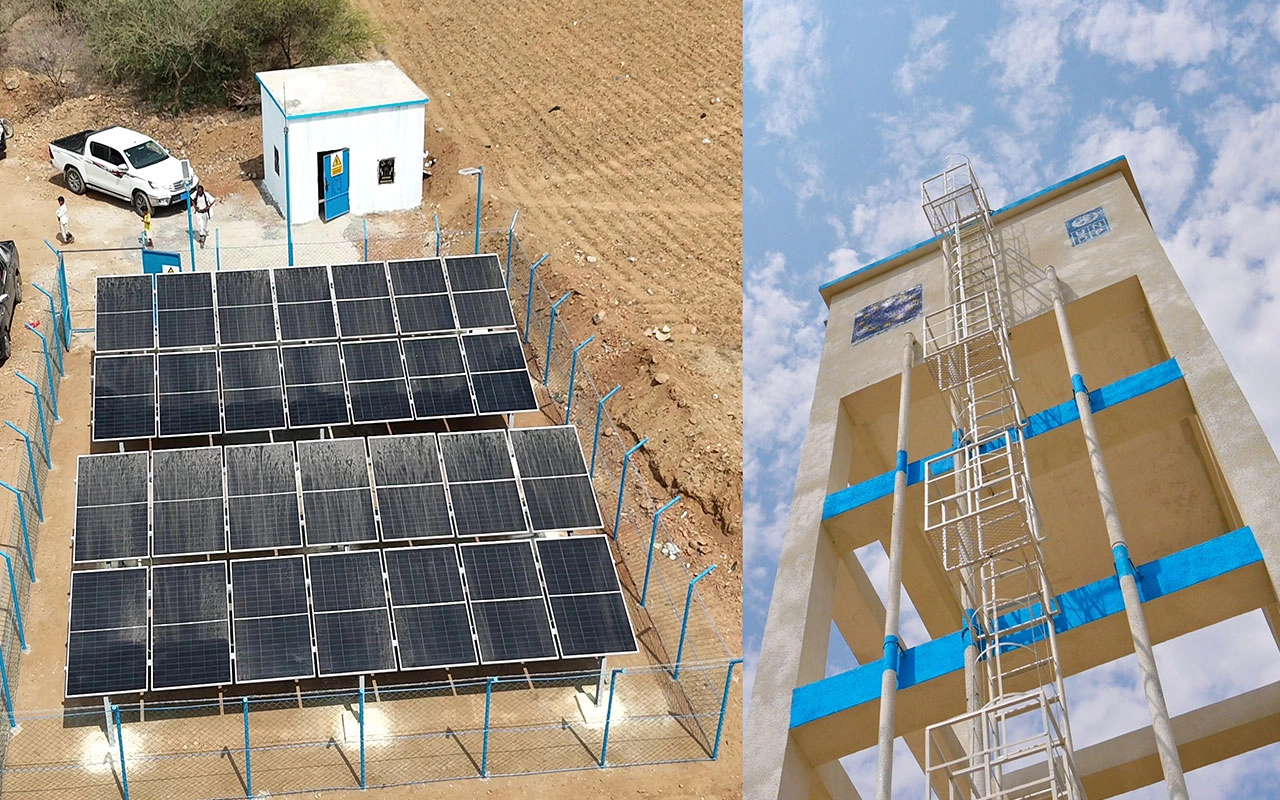
Abs Hemodialysis Center Rehabilitation: Supplied and installed 10 advanced dialysis machines, a specialized laboratory, a medical sterilization station, and a heavy-duty 150KVA backup generator, alongside training 15 medical technicians. Directly serves 100 chronic kidney patients and ~500,000 indirect beneficiaries.
- Shafar Water Scheme (Abs): Drilled 12m well, installed 21kW solar system, laid 4.3 km distribution network (12,852 beneficiaries).
- Al-Khamis Water Scheme (Mustaba): Built 50m³ elevated tank, 18.2kW solar array, 8.8 km network, 23 public taps (2,793 beneficiaries in 24 villages).
- Al-Mahabishah Sewage Upgrade: Procured and installed UPVC sewer mains serving 29,032 residents.
- Hajjah City Main Entrance: Asphalted 9,025 m² and laid 1,560m kerbstones (230,000 direct beneficiaries).
- Madinat Al-Aman Boulevard (Najrah): Asphalted 10,761 m² with central median (55,994 direct beneficiaries).
- Al-Mahabishah - Abs Road: Concrete paving and asphalt overlays over 1.4 km (45,000 direct beneficiaries).
Biodiversity, FMNR & Yemeni Coffee Value Chain Enhancement
Funded by German BMZ via Vision Hope International (VHI) & NAHR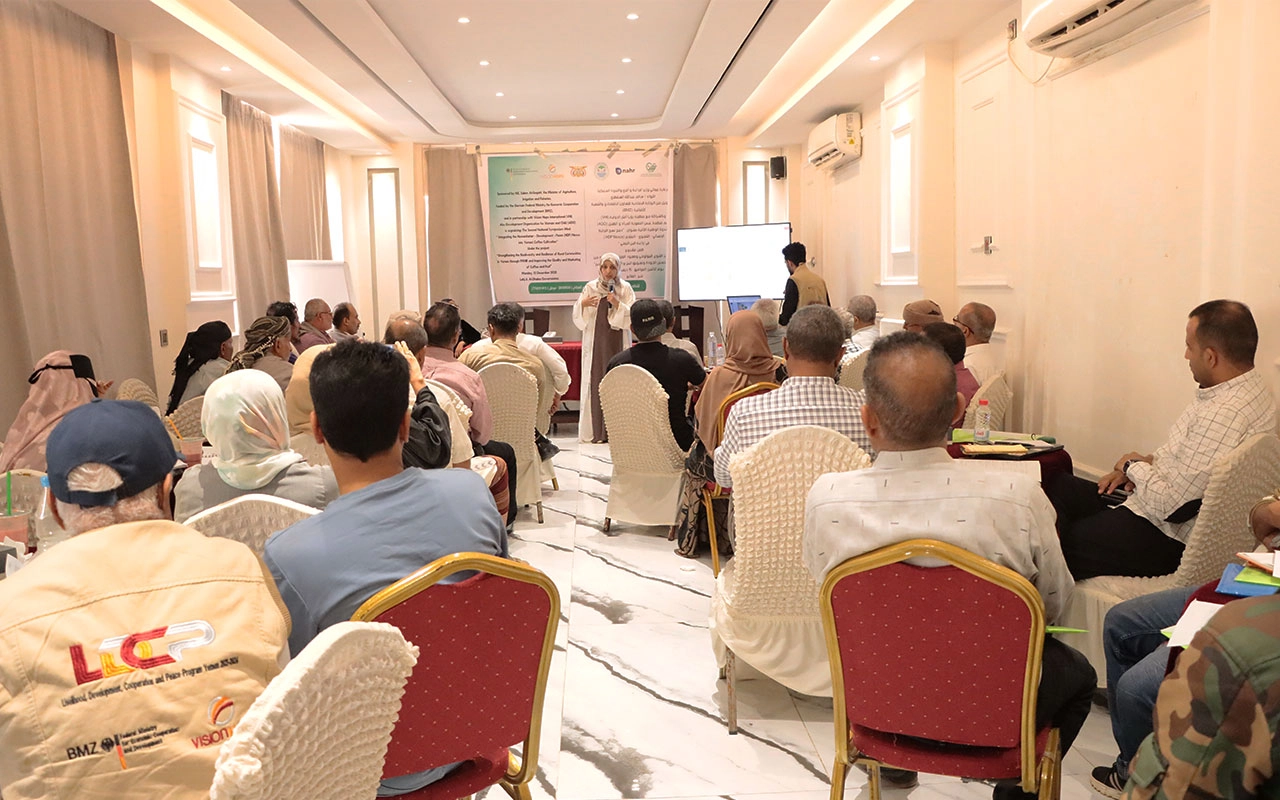
The project enhances the climate adaptive capacity of rural agrarian communities in Lahj and Ad-Dhale'e governorates by applying Farmer-Managed Natural Regeneration (FMNR) methodologies, protecting local biodiversity, and improving the post-harvest quality and marketing of authentic Yemeni coffee and fruit trees, directly supporting 1,250 farming households.
National Policy & Coffee Friends Network
- National Coffee Friends Network: Organized two multi-stakeholder workshops uniting 64 institutional actors from line ministries, private exporters, and agricultural cooperatives.
- National Coffee Symposiums: Hosted 2 technical symposiums attended by ~100 coffee specialists and farmers to formulate value-chain upgrading and international export standards.
Digital Innovation & Environmental Documentation
- National Policy Document & Mobile App: Commenced drafting the National Coffee Policy document and initiated the development of a dedicated smartphone advisory application for coffee growers.
- Documentary & Agro-Ecology Promotion: Produced a high-definition documentary spotlighting agro-forestry, water-efficient drip irrigation, and indigenous terracing conservation.
Yemen Humanitarian-Development-Peace (HDP) Nexus Conference 2025
Organized by ADO in partnership with Welthungerhilfe (WHH) and UN Women Yemen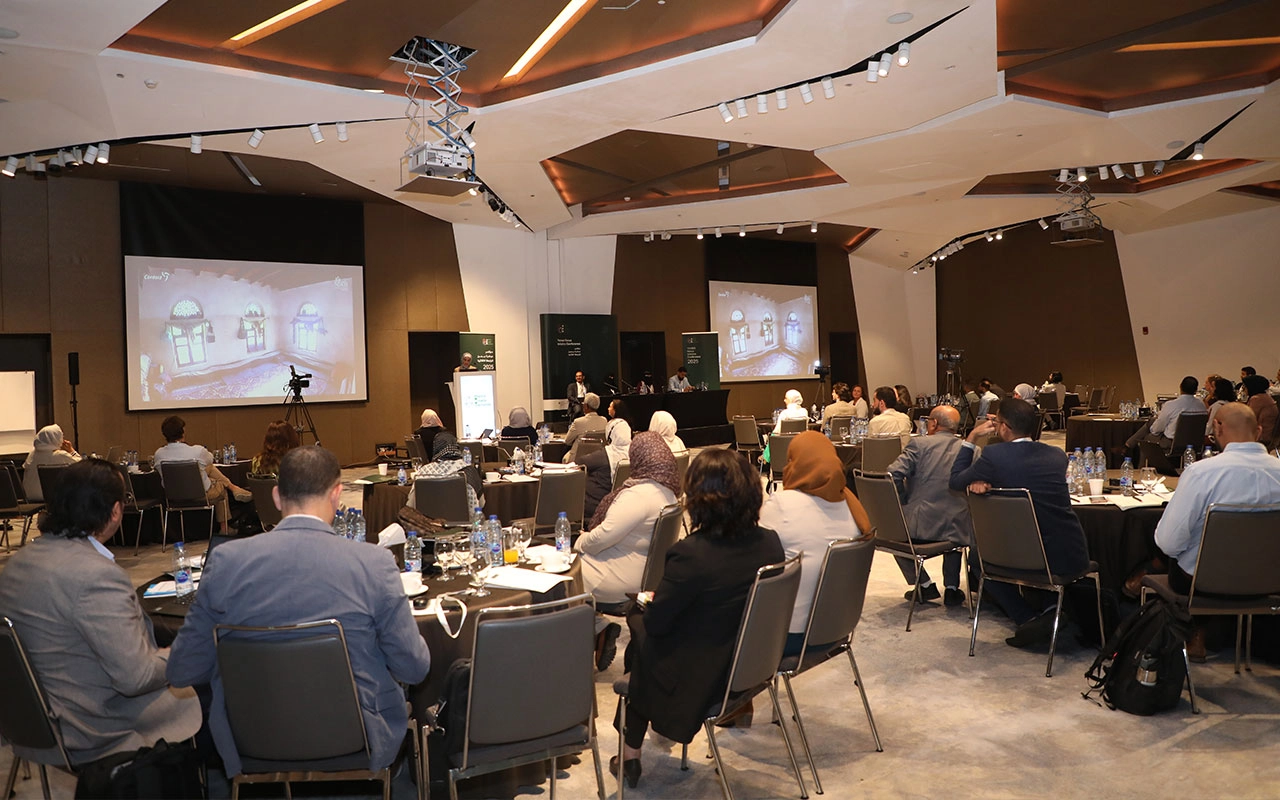
Key Conference Deliverables & Policy Milestones:
Endorsed an actionable operational framework for bridging short-term emergency relief with medium-term recovery and community peacebuilding.
Inaugurated an interactive digital mapping portal tracking cross-sectoral interventions and joint financing opportunities across Yemen.
Standardized organizational readiness assessment tools and cross-cutting indicators, achieving an institutional satisfaction rate exceeding 80%.
Amplified the strategic coordination of the Yemeni Women-Led Organizations Network, prioritizing women's direct agency in resource allocation.
Training & Institutional Capacity Building
Investing in human capital, technical excellence, and field complianceThroughout 2025, ADO invested heavily in institutional human resource development. Curricula prioritized clinical protocols for CMAM/TSFP, emergency supply chain tracking, teacher pedagogy in fragile contexts, psychological first aid, structural engineering QA/QC, and mandatory compliance modules on Protection from Sexual Exploitation and Abuse (PSEA), "Do No Harm", and secure field data governance.
Monitoring, Evaluation, Accountability, Learning & Safeguarding (MEAL)
Field governance, standards compliance, and accountability to affected populations| Pillar / Institutional System | Documented Field Practices & Protocols | Added Value & Concrete Impact |
|---|---|---|
| MEAL Framework | Conducted 1,238 on-site monitoring visits to nutrition sites, 55 joint supervisory visits for clinical and protection services, and monthly warehouse stock reconciliations. | Reinforced data integrity, accelerated bottleneck identification, and enabled adaptive project management. |
| Accountability to Affected Populations (AAP) | Operated 5 verified feedback channels (locked physical boxes, toll-free hotlines, WhatsApp, email, face-to-face dialogues). Logged 143 nutrition inquiries/complaints, resolving 93% within 48 hours. | Achieved a 100% total complaint resolution rate, bolstering community trust and service transparency. |
| Safeguarding & PSEA | Strict enforcement of zero-tolerance policies regarding sexual exploitation and abuse, with trained focal points and confidential whistleblowing channels. | Safeguarded rights-holders' dignity, prioritizing protection for vulnerable women, children, and youth. |
| Quality Assurance & Engineering Oversight | Rigorous review of Bills of Quantities (BOQs), concrete crush testing, material lab certifications, and Environmental and Social Management Plans (ESMPs) across 15 subprojects. | Guaranteed engineering longevity, structural resilience, and full donor compliance. |
| Gender Equity & Social Inclusion (GESI) | Constructed segregated school latrines for girls, created private safe spaces for women, and integrated persons with disabilities into beneficiary quotas. | Equitable access to lifesaving aid and developmental opportunity across marginalized strata. |
| Environmental & Climate Sustainability | Conversion of deep-well water schemes and rural schools to solar power; adoption of agro-ecological FMNR practices. | Decarbonized community services and eliminated recurring diesel fuel expenditures for impoverished villages. |
Operational Challenges, Adaptations & Strategic Lessons Learned
Transforming operational friction into pathways for systemic improvement| Operational Constraint | Programmatic Impact | ADO Adaptation Strategy |
|---|---|---|
| Therapeutic Commodity Pipeline Ruptures | Threatened treatment continuity for malnourished children and mothers. | Implemented preemptive stock monitoring, escalated early warnings to WFP, and intensified volunteer home tracing. |
| Rugged Mountain Topography | Hampered physical access to remote clinics, especially in Raymah. | Deployed mobile outreach clinics and organized community referral teams to transport critical patients. |
| Shortage of Rural Female Health Staff | Constrained maternal consultations due to cultural barriers. | Conducted peer-to-peer clinical coaching and advocated with District Health Offices for targeted female secondments. |
| Administrative Permit Delays | Caused localized scheduling shifts for field workshops. | Proactive liaison with line ministries, continuous stakeholder briefings, and early submission of sub-agreements. |
| Severe Public Infrastructure Degradation | Reduced efficiency and structural safety in targeted facilities. | Delivered comprehensive civil rehabilitation packages featuring solarization, clean water access, and new furnishings. |
Core Strategic Lessons
1. Multisectoral Convergence
Interventions yield higher survival and recovery outcomes when Health, Nutrition, WASH, Protection, and Education are co-located.
2. Local Ownership & Sustainability
Handing over civil assets alongside community-led Operation & Maintenance (O&M) committees guarantees longevity after grant closure.
3. Localization & Local Leadership
Deep coordination with local authorities and community leaders is the single most decisive factor for safe, unimpeded access.
4. Data Granularity & Harmonization
Standardized disaggregation by sex, age, disability, and displacement status prevents beneficiary overlap across multiple grants.
5. Preemptive Contingency Planning
Early risk matrices for supply chains and regulatory approvals reduce field paralysis in volatile operational environments.
Donors & International Partners
Strategic institutional partnerships delivering transformative impactInstitutional Donors & Funding Partners
World Food Programme
United Nations (WFP)
Donor & Technical Partner (TSFP)
UK Government (FCDO)
Foreign, Commonwealth & Dev Office
Donor for RISE Multisectoral Project
UN Development Programme
United Nations (UNDP)
Partner for SIERY Resilience Project
War Child Canada
Canada
Donor for Education in Emergencies
German Federal Ministry (BMZ)
Federal Republic of Germany
Donor for FMNR & Coffee Value Chain
Welthungerhilfe (WHH)
Germany
Strategic Partner for HDP Nexus
UN Women Yemen
United Nations
Partner for 2025 Nexus ConferenceConsortium & Implementing Partners
Coalitions & Strategic Platforms
Strategic Outlook & Priorities for 2026
Service Sustainability • Climate Resilience • Localization • Flexible FinancingPreserve continuity of primary healthcare, outpatient nutrition, clean water distribution, and child/gender protection with secured supply pipelines.
Standardize disaggregation by gender, age, disability, and displacement, utilizing biometric and digital tools to prevent intra-sectoral duplication.
Leverage lessons from SIERY to design climate-proof water schemes, health facilities, and rural feeder roads supported by community operation models.
Link emergency cash assistance with agro-forestry, FMNR soil rejuvenation, and direct market-linkage cooperatives for coffee and cash-crop farmers.
Scale the national HDP Nexus coordination platform to empower national NGOs and women-led initiatives in strategic humanitarian decision-making.
Develop evidence-based investment briefs demonstrating value-for-money to unlock multi-year programmatic funding with international donors.